Nagoya A F30G Tactical Antenna Review
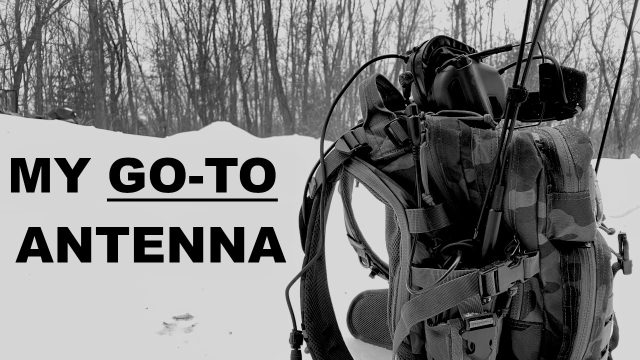
When it comes to emergency preparedness and building out a solid SHTF communications setup, I’ve tested a lot of gear over the years. My wife and I have put radios through real world tests, not just a quick check in the backyard, but out in the field, sometimes two, three, and even four miles apart across all kinds of terrain. And through all of that experience, one piece of gear has earned a permanent spot in my go bag: the Nagoya FA-30G tactical antenna.
Watch my F30G Review On My YouTube Channel
Why a Dual-Purpose Antenna Makes Sense for Preppers
Most antenna reviews you’ll find online are written from a pure radio performance standpoint. Guys plug an antenna into an SWR meter, see that it’s not sitting at a perfect 1.0, and write it off as garbage. But that’s completely missing the point of this antenna, and honestly, it’s missing the point of real world emergency communications altogether.
The FA-30G is a dual-purpose antenna, tuned for two different frequency ranges. When it’s unfolded to its full 30-inch length, it operates in the 155 to 165 MHz range, giving you roughly a quarter wave for lower VHF frequencies. That means significantly better reception for NOAA emergency weather alerts, which broadcast in the 162 MHz range. If you’re relying on one of those short stubby stock antennas that came with your radio, you’re leaving a lot on the table when it matters most.
When the antenna is folded down to its compact state, it’s tuned for 465 MHz, sitting right in the middle between 462 and 467 MHz. That puts it perfectly in the sweet spot for GMRS operation, covering both the standard GMRS channels at 462 MHz and the repeater frequencies at 467 MHz. One antenna, two completely different jobs.
Real World Performance Over Perfect Numbers
Here’s the thing about SWR ratings and highly optimized antennas: the real world doesn’t care about perfect numbers. In my experience, your terrain is going to have far more impact on your communication range than whether your SWR is sitting at 1.0 or 1.2. A ridge line, a dense tree line, or a concrete building will do more damage to your signal than a slightly imperfect antenna ever will.
Yes, you could go out and buy an antenna that’s perfectly tuned and optimized specifically for GMRS. You might squeeze out an extra eighth of a mile in ideal conditions. But if you’re a prepper, if you’re thinking about go bags and emergency scenarios and situations you might not be fully prepared for, having one antenna that can do both jobs is worth far more than chasing a perfect SWR reading.
That said, it’s worth knowing the limitation. When the antenna is unfolded for VHF reception, you can technically still transmit on GMRS, but it won’t be nearly as effective. You really do have to pick one mode or the other based on the situation. In a base camp scenario, I’ll pop the antenna open, drop it in a cradle, and scan the NOAA weather frequencies. When I’m heading out into the field, I fold it back down and I’ve got a solid GMRS antenna ready to go.
Compatibility and Setup
I’m running this antenna on my Boefang UV9G, which sits in a radio pouch on my day pack. Since I need my hands free and don’t want to be pulling the radio out constantly, I’ve got it paired with an ear and push-to-talk system. It’s a clean, low-profile setup that works well for extended outings.
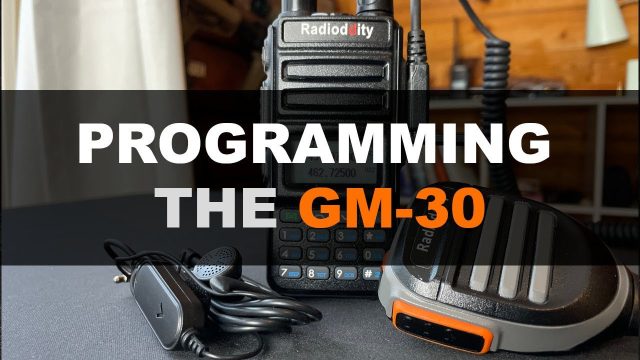
One thing I do want to flag: this antenna will not work with the standard GM-30. It will work with the GM-30 Pro and Plus editions, and in my experience, I haven’t come across a Boefang GMRS radio yet that this antenna doesn’t play nicely with. If you’re running any of the Boefang lineup, you should be good to go.
The Bottom Line
For around $25 to $50 depending on where you catch it, the Nagoya FA-30G Tactical Antenna is one of the best value purchases you can make for your emergency communications kit. It’s not trying to be the best GMRS antenna in the world. It’s trying to be the best antenna for someone who needs one tool to handle multiple situations, and it does exactly that.
If I’m heading somewhere unfamiliar, somewhere I don’t know what I’m going to need, this is the antenna going in my bag. The ability to switch between picking up emergency weather broadcasts and communicating on GMRS frequencies with a single piece of gear is the kind of practical, flexible thinking that emergency preparedness is all about. When things go sideways, simplicity and versatility win every time.